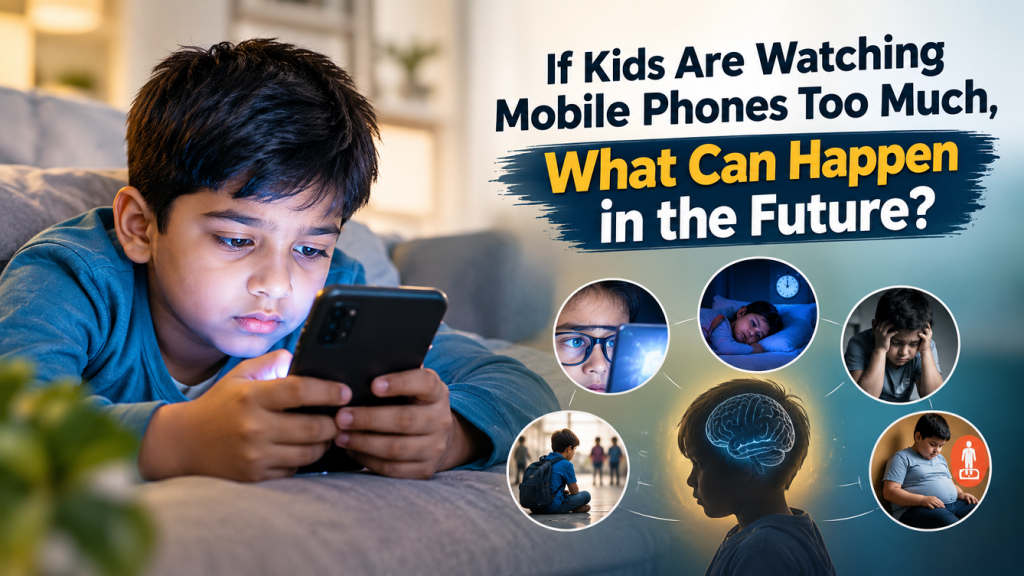
Mobile phones have become a common part of everyday life. Children use them for cartoons, games, videos, online classes, and entertainment. Some screen time may be normal, but spending too much time on mobile phones can affect a child’s daily habits, learning, and overall development.
One of the biggest concerns is reduced physical activity. When children spend many hours watching a screen, they may spend less time playing outside, walking, running, or taking part in sports. These activities are important for healthy physical development.
Too much mobile use can also affect sleep. Children who use phones late at night may find it difficult to sleep on time. Poor sleep can make them tired, less active, and less attentive the next day.
Another concern is attention and learning. Short videos and fast-changing content can keep children looking for something new. If mobile use becomes excessive, some children may find it difficult to sit patiently, concentrate on their studies, or complete activities without getting distracted.
Speech and Communication
Young children learn language by listening, talking, and interacting with people around them. If a child spends too much time watching videos instead of talking with parents, grandparents, siblings, or other children, they may have fewer opportunities to practise communication and social skills.
Less Creativity and Imagination
Children develop creativity through playing, drawing, building things, reading stories, and creating their own games. When mobile entertainment takes up most of their free time, they may get fewer opportunities to use their imagination and explore things on their own.
Behaviour and Emotions
Some children may become upset, angry, or restless when the mobile phone is taken away. If a phone is regularly used to calm a child whenever they are bored, crying, or upset, the child may slowly start depending on it to manage those feelings.
Eating Habits
Some children become used to watching videos while eating. They may pay less attention to their food and may not develop healthy eating habits. Parents may also find it difficult to change this routine later.
Family and Social Interaction
Children need real conversations and face-to-face interaction to learn patience, sharing, listening, and understanding others. Family time, playing with friends, and spending time with grandparents can help children develop these important skills.
What Can Parents Do?
Parents do not have to completely stop children from using mobile phones. Instead, they can create simple and consistent rules:
- Set a fixed time for mobile use.
- Avoid mobile phones during meals.
- Keep screens away during bedtime.
- Encourage outdoor play and physical activities.
- Give children books, drawing, puzzles, and other creative activities.
- Spend some phone-free time together as a family.
- Avoid giving a mobile phone every time the child is bored or upset.
- Most importantly, parents can set a good example by limiting their own phone use around children.
A Small Change Today Can Help Build Better Habits Tomorrow
Mobile phones are useful tools, but they should not become a child’s main source of entertainment, learning, or companionship. Giving children enough time for play, sleep, studies, family conversations, and real-world experiences can help them develop healthier habits as they grow.
For parents, the goal is not “No mobile phone.” It is “Right use, right time, and right limits.”

Leave a Reply